Bird
Rupicola peruvianus
Andean Cock-of-the-rock
Biological Facts
Ecological Role
Crucial seed disperser, fundamental for the regeneration of Andean forests.
Habitat
Humid cloud forests and rocky canyons between 500 and 2,400 meters in elevation.
Detailed Diet
Primarily frugivorous (80% wild fruits); also consumes insects, lizards, and frogs.
Behavior
Polygynous 'lek' behavior; males do not participate in nest care or chick rearing.
Diet
Primarily frugivorous (fruit), supplemented with insects, small amphibians, and reptiles.
Size & Weight
Approximately 32 cm in length and weighs between 200 and 300 grams.
Conservation Status
Least Concern (IUCN); however, habitat loss remains a constant threat.
Best Sighting Tips
In Mindo, the best time is at dawn (6:00 AM) at known leks like Refugio Paz de las Aves.
Folklore and Symbolism
National Bird of Peru; called 'Tunki' in Quechua language.
Best Time to See
From July to February (breeding season); best at dawn (around 6:00 AM).
Folklore & Culture
National bird of Peru and known as 'Tunki' in Quechua. In Mindo, it is a symbol of ecotourism.
Size and Weight
Approximate length of 32 cm; weight between 200 and 265 grams.
About this Species
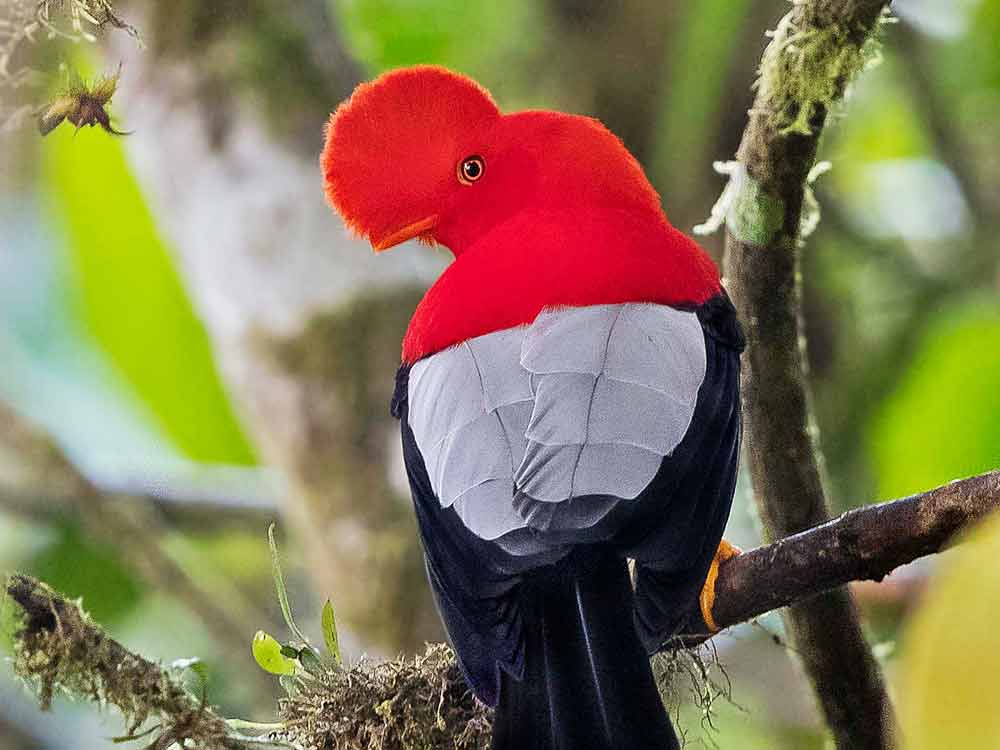
The Andean Cock-of-the-rock is a stunning passerine bird and the national bird of Peru. Males are iconic for their brilliant orange or scarlet plumage and a unique fan-shaped crest that hides their bill. They are primary residents of the Andean cloud forests, particularly in the Mindo valley of Ecuador, where they frequent rocky ravines and humid forests.
They are best known for their communal display grounds, or 'leks.' At dawn, groups of males gather to compete for female attention through elaborate bobbing, wing-snapping, and loud squawking. In contrast, females are cryptically colored in brownish-orange to blend into the shadows of the forest while they tend to mud nests on cliff faces alone.
Sightings Map
1 recorded observations