Bird
Philodice mitchellii
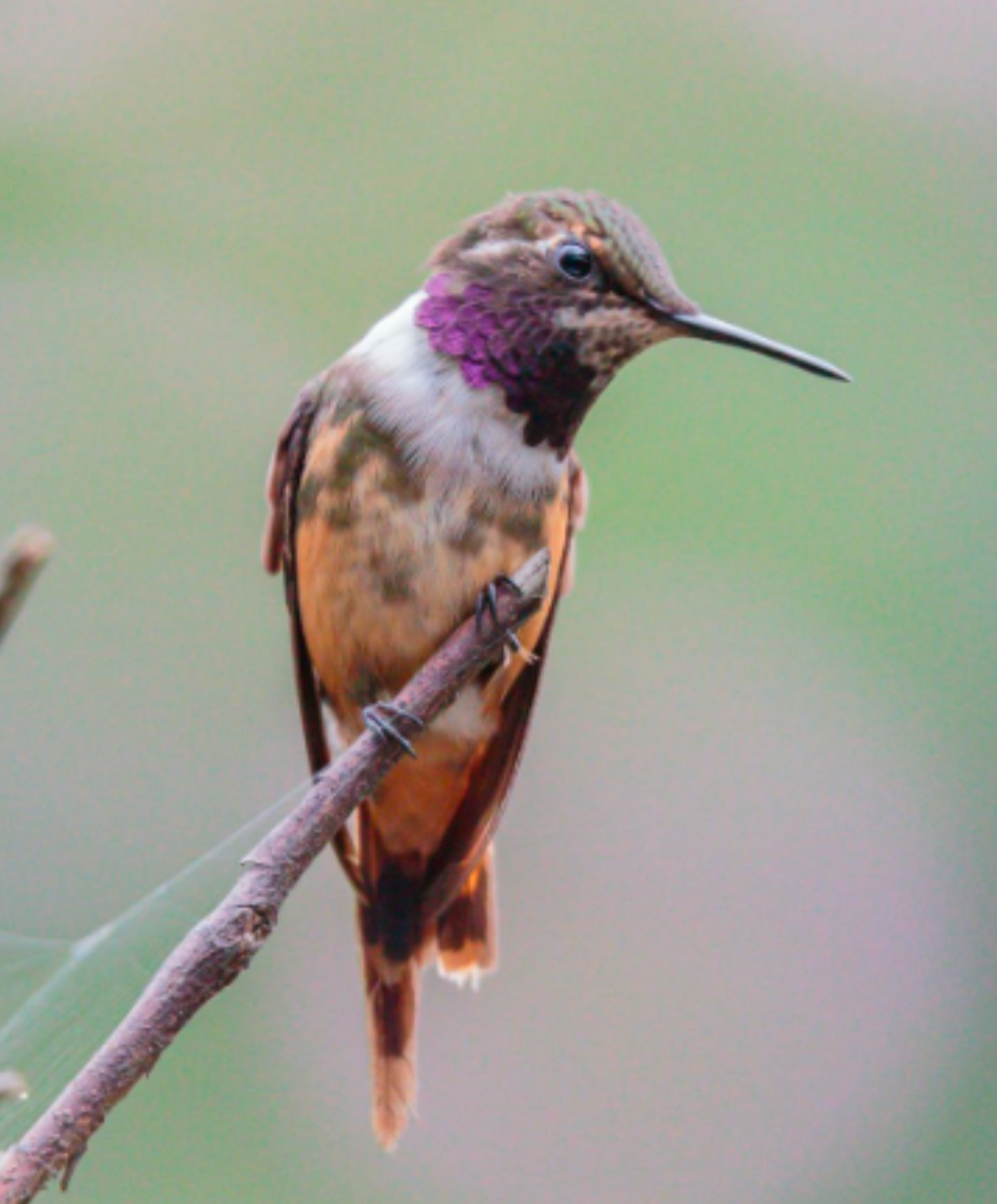
Purple-throated Woodstar
Biological Facts
Diet
Nectar from tubular flowers (Ericaceae) and small insects caught in mid-air.
Ecological Role
Key pollinator for high-mountain plants inaccessible to larger hummingbirds.
Complex Behaviors
Erratic bee-like flight; males perform high-speed diving displays to defend territories.
Conservation Status
Least Concern (IUCN); stable but sensitive to deforestation.
Size and Weight
Length: 7 cm; Weight: Approximately 3 grams.
Habitat
Cloud forest edges and clearings between 1,000 and 2,400 meters above sea level.
Best time to see
Year-round; peak activity between December and March during mass flowering.
About this Species
The Purple-throated Woodstar (Philodice mitchellii) is a minute and spectacular hummingbird found in the humid montane forests of the Chocó-Andean region. Often mistaken for a large bumblebee due to its diminutive size and extremely rapid wingbeats, this species is a true "jewel" of the cloud forest canopy. In Mindo, Ecuador, it is a prized sighting for birdwatchers, frequently seen darting between flowering shrubs.
- Sexual Dimorphism: The male is easily identified by his iridescent violet-purple gorget (throat) and deeply forked tail, while the female possesses buffy-orange underparts.
- Identification: Both sexes display prominent white patches on the sides of the rump, which are highly visible during flight.
- Niche: They are specialized foragers, often "traplining" between specific nectar sources like Ericaceae and Gesneriaceae.
Sightings Map
1 recorded observations